How to Build Assets, Not Output
Most brands produce content in the same way people in the 1800s built railways: lay track, move on, and lay more track. The goal is movement, visibility or activity. The assumption is that if you produce enough of it, something will eventually connect.
But movement isn’t leverage. And in the digital economy, output isn’t value.
The web is full of content, including long-form posts, how-to guides, landing pages, explainers, scripts, and playbooks, most of which are written by people whose only strategic input was “we need more content.”
The result is predictable: large volumes of low-friction writing, none of which actually impact the sales funnel, inform product decisions, reduce operational drag, or earn compound returns. What you’re left with is overhead disguised as effort.
Content that compounds doesn’t behave this way. It’s not built to be published. It’s built to persist.
Strategic Content Doesn’t Just Inform. It Performs.
Here’s the thing no one wants to say out loud: most agencies don’t know what the content they produce is supposed to do.
Ask them what that blog post is meant to achieve, and they’ll say something vague about brand visibility, SEO uplift, or educating the market. Ask them how it connects to the sales pipeline, and they’ll change the subject. For most agencies, content is a deliverable. It exists to fulfil a scope, not to perform a function.
When we talk about compounding content, we’re talking about work that does more than one thing, on purpose. For instance, a comprehensive how-to guide that not only educates the market but also serves as a reference for customer support. Content that enters through search and resurfaces in onboarding. Content that anchors internal knowledge and leads to external credibility. Content that gets referenced in calls, indexed in workflows, looped in by automations, cited by sales, and linked to by strangers. Not because it was cleverly distributed, but because it was structurally necessary.
Writing is just the surface. The value lies in how it’s engineered to solve business friction.
AI Flooded the Market. Good. It Flushed the Pretenders.
The arrival of LLMs triggered panic across marketing teams. If content can be generated, at scale, by tools that cost less than lunch, what happens to the value of writing? The answer is nothing because content was never valuable in isolation. The role of AI in content creation is not to devalue it, but to enhance its value by allowing us to focus on strategic decisions.
GPT didn’t devalue content. It devalued content written by people who never understood what they were building in the first place.
The market is now flooded with explainers, listicles, SEO posts and AI-written filler that looks passable but feels hollow. And it’s forced a reckoning. Content now needs to earn its keep. Not with polish, but with placement inside a system, supporting a process, anchored to a business objective.
We use AI, but we don’t build around it. It helps with pattern recognition, structural modelling, and workflow acceleration. But we don’t ask it what to write. That’s a strategic decision. And it always has to come from someone who understands where the content fits into the broader system.
That’s the part you can’t fake.
Content as Operational Infrastructure
Here’s how we think differently. We don’t start with content. We begin with friction.
Where are the bottlenecks? Where are the support tickets stacking? Where are the same sales questions being answered manually daily? Where are users dropping off? Where are leads entering the funnel but failing to qualify?
These are not “marketing questions.” They’re system signals. And they tell us exactly what kind of content needs to be created, not as material, but as infrastructure. Content as infrastructure means that every piece of content serves a purpose beyond just conveying information. It’s designed to address specific frictions or needs within the business, whether it’s reducing support tickets, qualifying leads, or aligning internal teams.
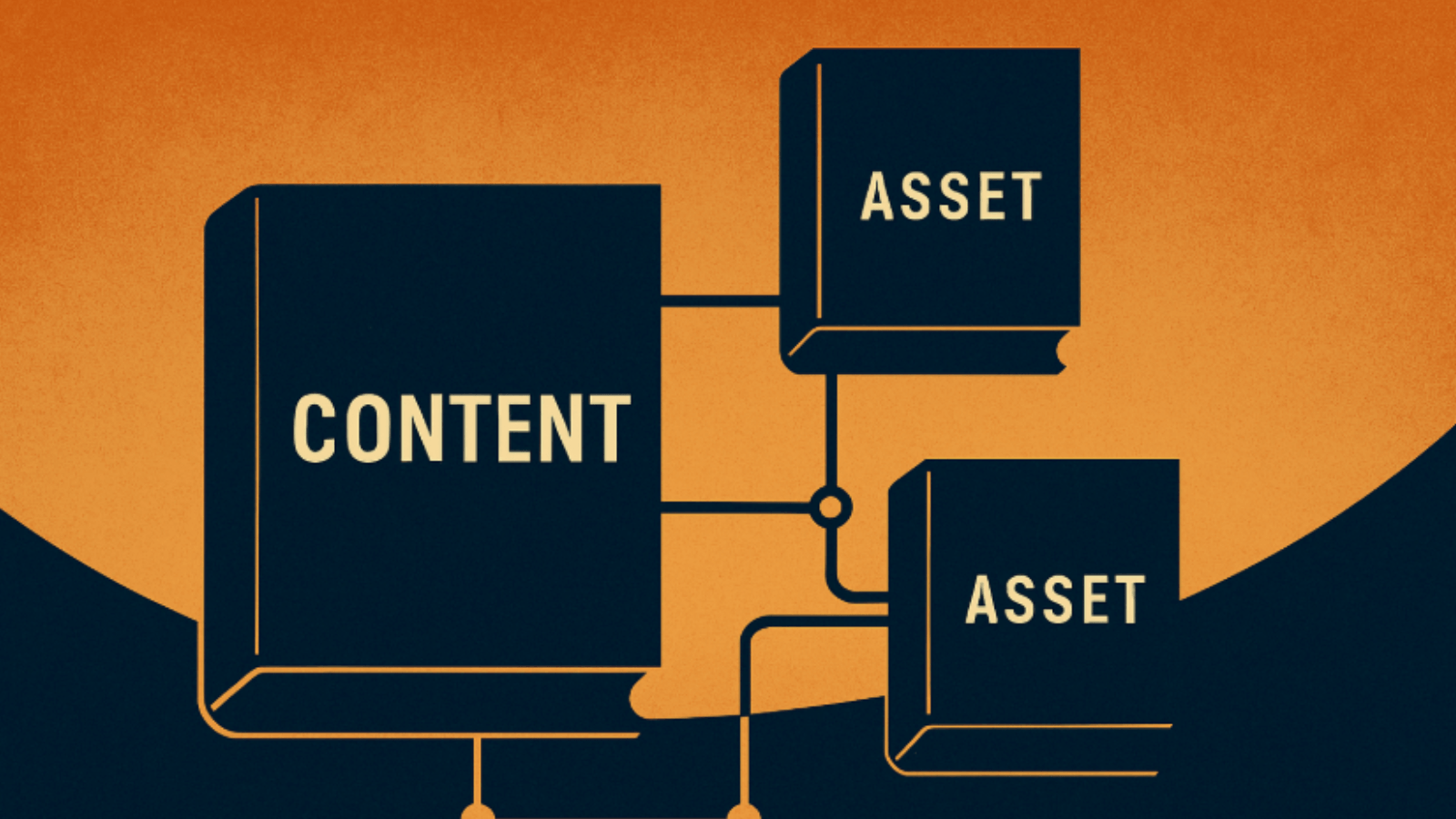
An article might also serve as a supporting document. A guide might remove the need for a sales call. A video might cut onboarding time in half. A playbook might trigger a workflow or define a nurture sequence. Most teams repurpose content after the fact. We engineer it to operate across systems before it’s even written. These systems could be your sales process, customer support, onboarding, or even internal knowledge management.
Most agencies can’t think like this because they’re built around services. We’re built around function. And content, when treated correctly, is functional infrastructure.
The Result Is Compounding Returns.
If you build content to serve multiple systems, such as search, support, sales, and operations, it creates leverage. Not vanity metrics, but real, observable, compound outcomes:
- Reduced time-to-close, because buyer objections are answered before the call.
- Lower support volume, as core frictions are resolved upfront.
- Higher lead quality, because what’s published reflects what’s being sold.
- Better internal alignment, because what’s externalised is also internally understood.
- Higher authority, because your content helps people do things.
Compounding isn’t a metaphor here. It’s the natural result of building content into the system, not around it.
You Don’t Need More Content. You Need Less, Designed Better.
Most companies think they have a content problem. What they have is a strategy problem masquerading as a production backlog.
The solution isn’t to hire more writers, or generate more SEO pages, or post more frequently on LinkedIn. The solution is to stop publishing anything that doesn’t directly support the systems that matter.
So the next time you commission content, stop asking what it should say. Ask what it needs to do, and who it’s helping?. What is it connected to? Where does it fit into the broader system that runs your business? Understanding the broader system empowers us to create content that truly makes a difference.
Because the only content worth creating is the kind that removes friction, earns attention without demanding it, and continues working long after you’ve moved on to the next problem.